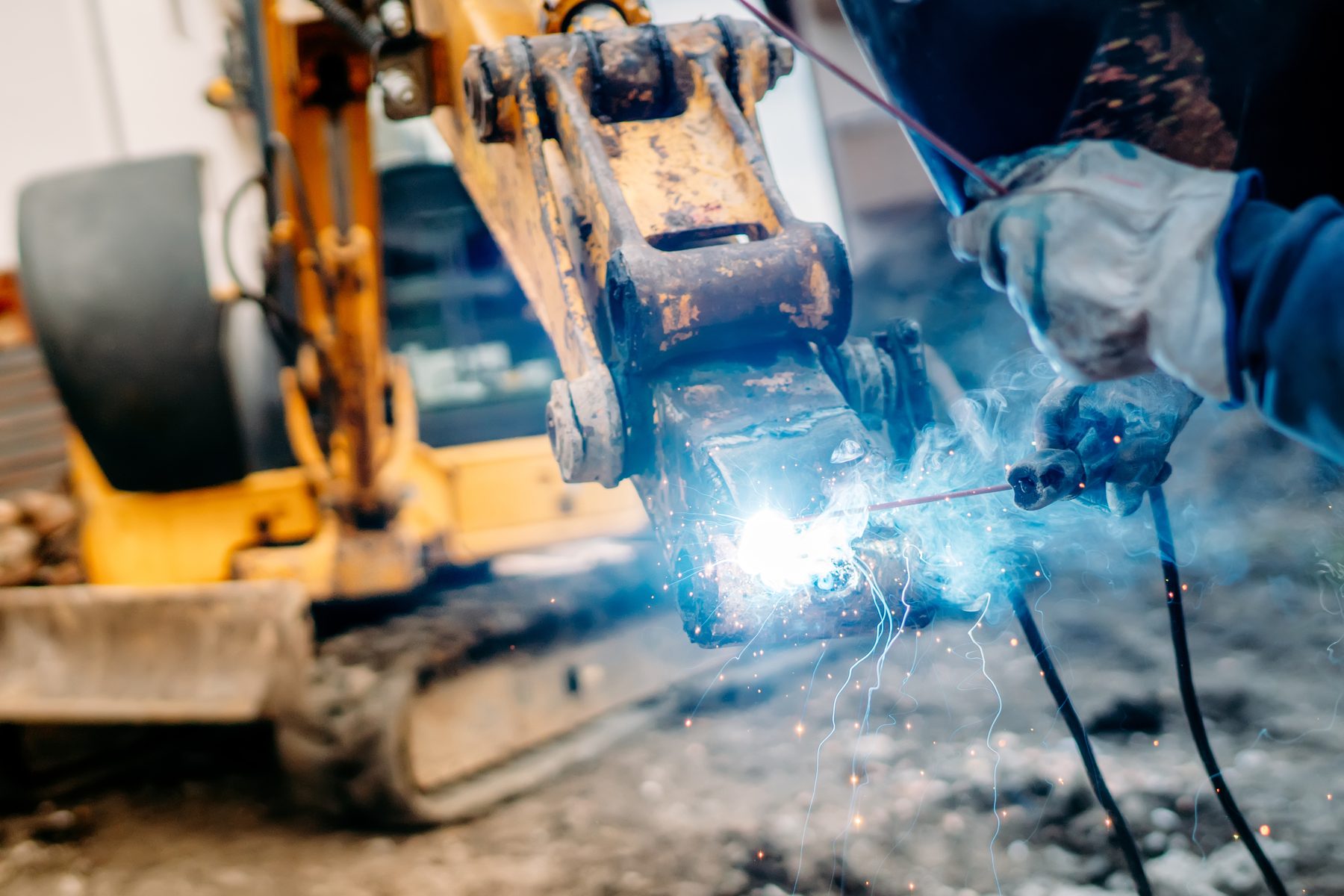
Heavy equipment can often be welded where it sits in New Orleans when the broken part is steel that takes a weld. The steel grade, the crack and the site's safety setup decide each repair. The machine is parked, lowered and cleared of fire hazards first, and then it is welded on site without being hauled anywhere.
Last Updated: November 18, 2026
Table of Contents
- Can Heavy Equipment Be Welded Where It Sits in New Orleans, LA?
- Step 1: How Do You Describe Equipment Damage to a New Orleans Welder?
- Step 2: How Should Heavy Equipment Be Parked and Shut Down for Welding in New Orleans?
- Step 3: What Has to Be Cleared Around Heavy Equipment Before Welding in New Orleans?
- Step 4: How Does New Orleans Weather Affect Outdoor Equipment Welding?
- Step 5: What Happens After the Weld on a New Orleans Equipment Repair?
- What Sets the Cost of Heavy Equipment Welding Repair in New Orleans?
- The Takeaway on Heavy Equipment Welding in New Orleans
- Frequently Asked Questions
A cracked steel part or a split mounting bracket can sideline a machine in the middle of a job. Getting that much steel to a shop can take more effort than the repair.
At Big Easy Mobile Welders, we tackle cracked and broken steel machinery right on the job throughout the New Orleans area. Jobs like these come under our mobile welding for homes, businesses and job sites, so the machine stays on the property.
This page walks through which equipment repairs suit on-site welding and what decides each one. It then sets out the steps that get a machine ready for the welder.
Can Heavy Equipment Be Welded Where It Sits in New Orleans, LA?
Yes, plenty of heavy equipment around New Orleans can take a weld right where it sits, as long as the broken part is weldable steel. Equipment that is too heavy to move stays put, so nobody has to strip it down, load it and refit it afterward.
Where Our Equipment Work Starts
We take on equipment repairs where the damaged piece is steel that can be welded, whether it has cracked or broken clean through. That can mean a split bracket, a cracked mount or a frame member that has given way. This work falls within our industrial and commercial welding.
Local businesses often call a welder about damaged supports and equipment, while contractors bring one in for steel on a construction site. Repairs like these fall under our specialized welding visits, and our service area runs out to LaPlace, Hammond and St. Rose.
A machine that weighs several tons rarely leaves the lot for a weld. Farm machinery runs into the same problem, as our post on mobile welding for farm and rural machinery describes.
The Steel Grade Comes First
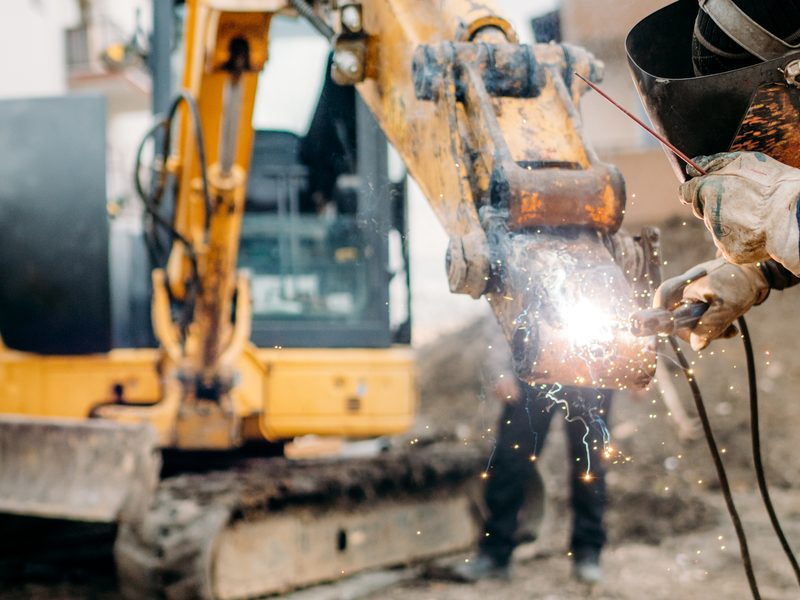
Heavy machines are not all built from one kind of steel, and the grade shapes how a repair is welded. Every metal needs settings and filler of its own, so we pin down the material before we arrive.
Wear-resistant plate is one example. SSAB, the steel maker behind Hardox, describes Hardox as a wear steel found in equipment for construction, roadbuilding, agriculture, quarrying and mining.
SSAB publishes welding guidance for its grades, and thicker or harder plate can call for more care.
What This Page Leaves Out
This page covers the steel structure of a machine and nothing more. Hydraulic systems, engines and lifting gear such as cranes and hoists sit outside it.
For those parts, the machine's maker or your site safety lead decides what repair is allowed and who signs off. Some makers may call for a new part in certain cases.
We also make no promise about how a repaired part performs once the machine goes back to work. What we can give you is a straight answer, before any welding, on whether the damage suits an on-site repair.
Step 1: How Do You Describe Equipment Damage to a New Orleans Welder?
Describe equipment damage to a New Orleans welder with clear photos, the type of metal if known and the spot where the machine is parked. With those details, we can pack the right filler and plan the visit around your schedule.
Take one photo up close on the crack and one from farther back that shows the whole part. Note whether the damage sits near a fuel tank, a hydraulic line or anything else that can burn.
Send the photos and the machine's location through our contact page, and add how the part broke if you saw it happen. Our post on getting a site ready for a mobile welder covers parking and access in more detail.
Step 2: How Should Heavy Equipment Be Parked and Shut Down for Welding in New Orleans?
Before welding at a New Orleans job site, park the machine, set the brake and lower or block its bucket, blade or dump body. That setup follows OSHA's construction rule for equipment being repaired, and it keeps the machine from shifting while someone works on it.
OSHA's construction equipment rule, 29 CFR 1926.600, is current in the 2026 eCFR text. It says blades, end-loader buckets, dump bodies and similar parts must be fully lowered or blocked while being repaired.
The same rule calls for controls in neutral, motors off and brakes set, unless the work requires otherwise. Raised machinery gets blocked or cribbed before anyone works under it, and a machine on a slope gets its wheels chocked.
Step 3: What Has to Be Cleared Around Heavy Equipment Before Welding in New Orleans?
Before welding heavy equipment in New Orleans, anything nearby that can burn gets moved or covered, and fuel tanks get dealt with first. Sparks can land a long way from the arc, so the clear zone around the machine has to be wide.
OSHA's 2026 eCFR text of 29 CFR 1926.352 applies when the part being welded cannot be readily moved. Fire hazards nearby that can be moved go to a safe place or get protected, with extinguishers ready.
Under that rule, a tank or hollow part that held flammable or toxic material is first filled with water, or cleaned, ventilated and tested. A vent also goes in so pressure can escape once heat is applied.
Business sites may also require written hot work approval and a fire watch, as our guide to welding permits on commercial property explains.
Step 4: How Does New Orleans Weather Affect Outdoor Equipment Welding?
New Orleans rain can stop outdoor equipment welding, because water carries current and moisture can weaken a weld. The welder usually holds off until it passes or sets up beneath a solid roof, keeping the part and the ground dry.
Power is less of a worry on an open lot. Many mobile rigs carry an engine-driven machine that generates its own electricity, and we check power needs while estimating the job.
If the machine can sit on firm, dry ground before the visit, setup tends to go faster. Soft or flooded ground is worth flagging when you send photos.
Step 5: What Happens After the Weld on a New Orleans Equipment Repair?
After the weld on a New Orleans equipment repair, our welder walks you through the finished work right where the machine sits. From there, you and the machine's maker decide when it goes back to work and under what checks.
A crack that returns after a repair usually points to a cause the weld did not touch. Our post on what makes welds crack explains why that cause gets fixed ahead of another pass.
Sometimes the damaged piece is past repair and a new part makes more sense. Our metal fabrication service cuts, forms and welds replacement parts, on site where the job allows.
What Sets the Cost of Heavy Equipment Welding Repair in New Orleans?
Heavy equipment welding repair in New Orleans is priced by the steel, its thickness, the welding involved and access to the damage. A repair and a newly fabricated part are priced on different terms, and we quote only after seeing the job.
| Price Driver | What It Changes | What Helps Us Quote |
|---|---|---|
| Steel grade and thickness | Process, filler and time on the weld | The metal, if known, and a close photo |
| Size of the damage | How much welding the repair takes | A wide photo showing the whole part |
| Access on site | Setup time and how hard the damage is to reach | Where the machine is parked and how it sits |
| Repair or new part | Welding the old piece versus fabricating a replacement | Whether the old part is still in one piece |
Every quote follows a look at the damage, and the estimate costs nothing and commits you to nothing. For a sense of how smaller jobs are priced, see our post on pricing a small welding job.
The Takeaway on Heavy Equipment Welding in New Orleans
Heavy equipment in New Orleans can often be repaired on site once the machine is parked and lowered and the broken steel takes a weld. From there, the steel grade, the damage and the site's safety setup shape the job.
At Big Easy Mobile Welders, we drive the rig out to your machine and tell you up front whether the damage looks like a fit. Call (504) 370-2757 to book a free estimate at the spot where your equipment is parked.
Frequently Asked Questions
What steel are excavator buckets made of?
Excavator buckets are often built from wear-resistant steel in the areas that dig and scrape, with the grade varying by maker. SSAB, which makes Hardox, lists construction equipment among the uses for its wear steel. Ask the bucket's maker for the grade before any welding.
Can you weld Hardox steel?
Yes, and SSAB's product page for Hardox 400 says it welds with consumables much like those for mild steel. The same page says no preheat is needed up to 20 mm thick. For harder grades or thicker plate, SSAB's own guidance applies, and we confirm the grade first.
How much does excavator bucket repair cost?
Bucket repair cost generally depends on the steel grade and thickness, how much welding the damage needs and how easy it is to reach. Repairing a worn piece costs differently from fabricating a replacement. For any steel equipment repair, we quote after seeing the damage, and the estimate is free.
What is heavy duty welding?
Heavy duty welding usually means welding thick steel on machines, attachments and structures that carry big loads or take hard wear. The work often happens in the field, since the parts are too large to move easily. Steel grade and thickness shape how each job is welded.