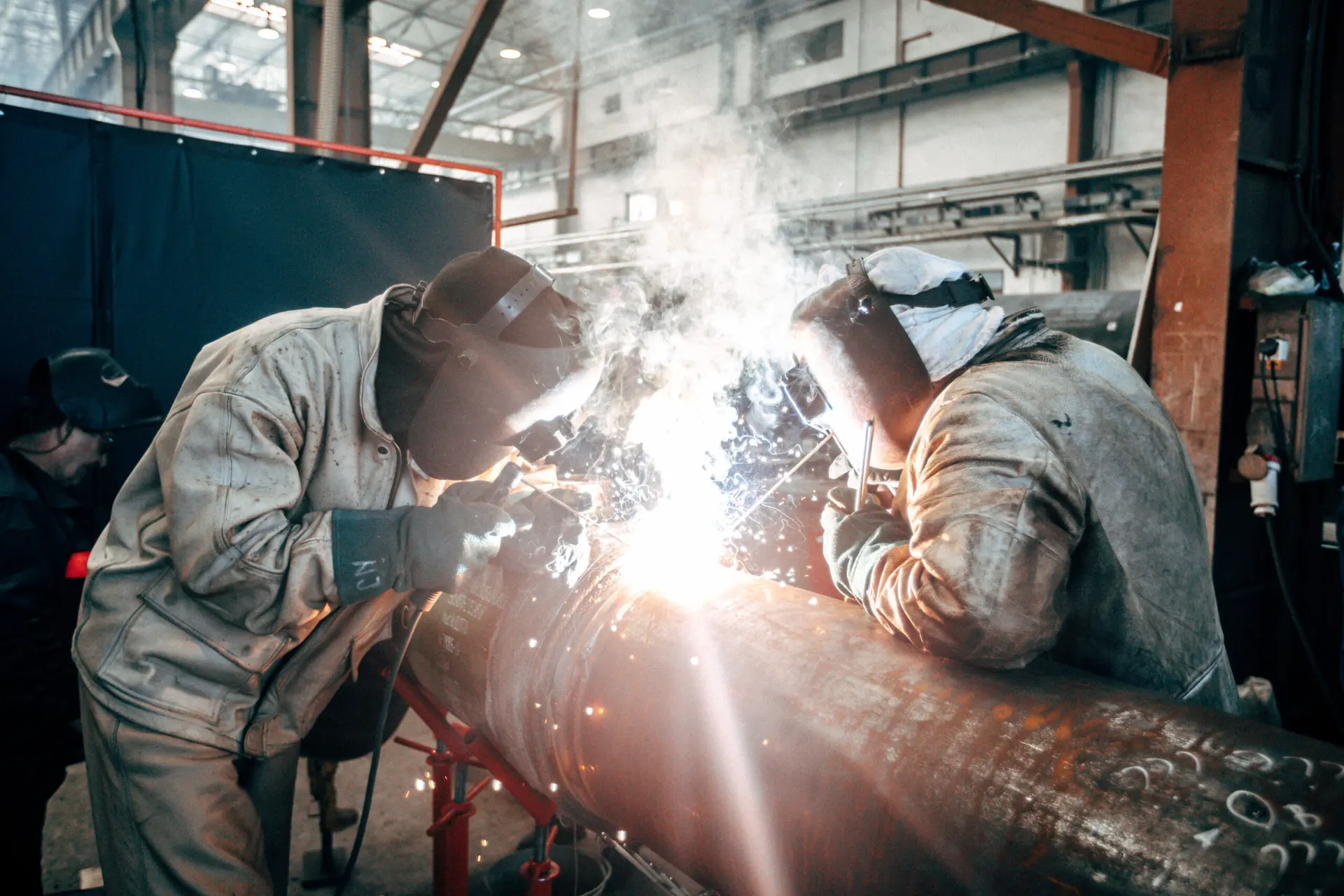
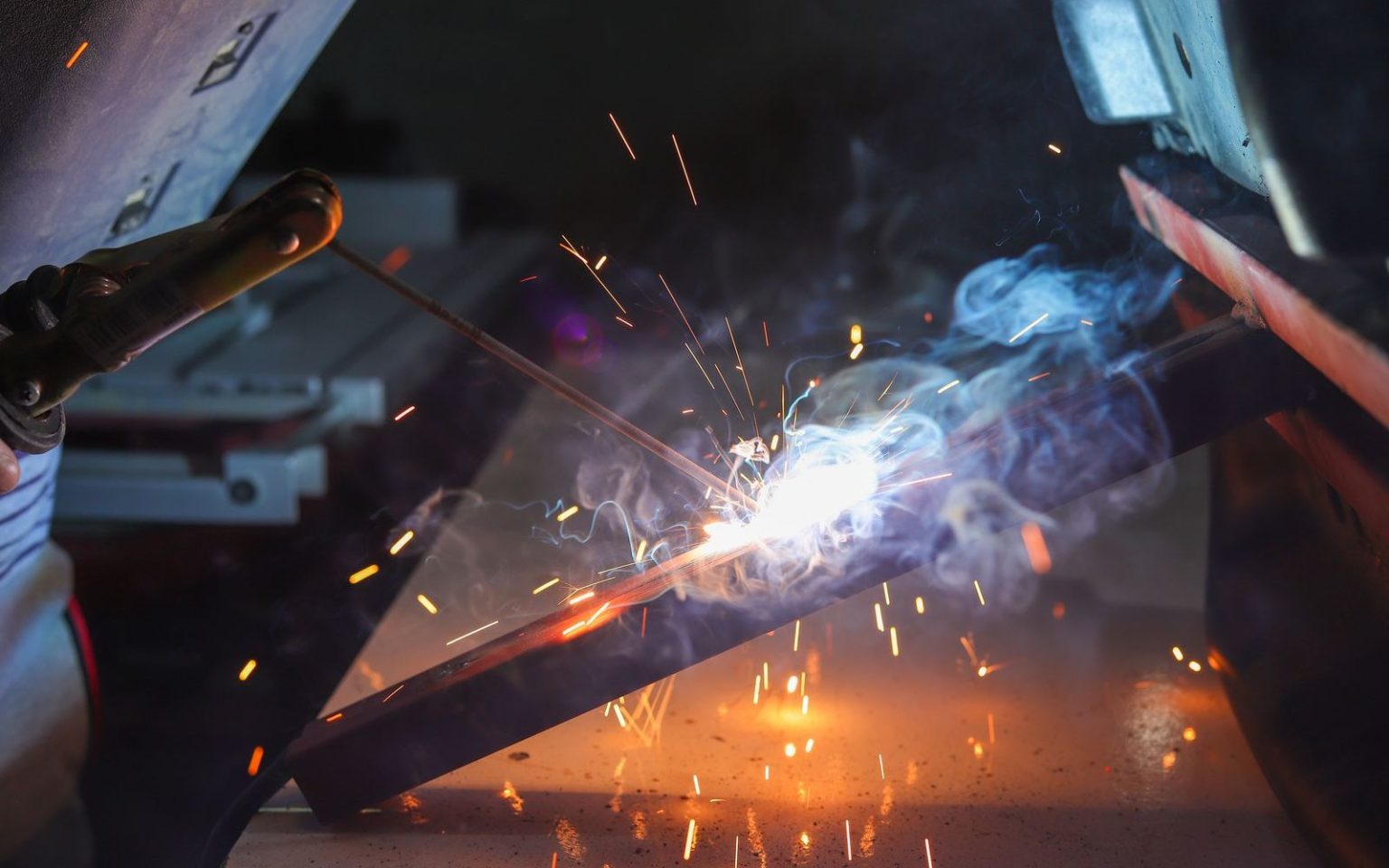
Commercial welding is hot work, and federal rules require the area to be inspected and authorized before an arc is struck, preferably through a written permit. Combustibles must be moved at least 35 feet from the work site where practicable, or shielded. A trained fire watch is required wherever more than a minor fire could develop, and it must stay in place for at least a half hour after the work stops.
On a commercial property, the welding itself is rarely the part that stalls a job. The paperwork and the fire-prevention setup around it are what decide whether work starts on schedule.
Property managers and facility teams usually discover this the first time a contractor asks who authorizes hot work on site. At Big Easy Mobile Welders, we work on commercial and industrial sites across the New Orleans area and walk into that conversation on day one.
This article covers what hot work means, when a fire watch is required, and what a site needs settled before a crew arrives. Contact us today to review the requirements for a job at your property.
What Counts as Hot Work on Your Commercial Site?
Hot work is any operation that produces flame, sparks, or enough heat to ignite something nearby. Welding and cutting are the obvious cases, and grinding, brazing, and torch work fall under the same umbrella.
The category matters because it triggers specific federal requirements rather than general good practice. Once a job is hot work, the site owes an inspection, an authorization, and a fire-prevention plan before anyone starts.
The trigger is the operation, not the size of the job. A short cut on a loading dock sits under the same rule as a full day of structural welding inside a plant.
When Does a Welding Job Require a Fire Watch?
A fire watch is not a formality, and it is not optional at the crew's discretion. Federal rules name the specific conditions that make one mandatory.
| Condition on Site | What the Federal Rule Requires |
|---|---|
| More than a minor fire could develop from the work | A fire watch is required for the duration of the operation. |
| Appreciable combustible material sits closer than 35 feet to the work | A fire watch is required. Relocate the material where practicable, or shield it. |
| Appreciable combustibles beyond 35 feet are easily ignited by sparks | A fire watch is still required, because sparks travel farther than people expect. |
| Wall or floor openings within 35 feet expose combustibles in adjacent areas | A fire watch is required, and precautions must stop sparks from reaching combustibles beyond the opening. |
| Work has just finished | The watch continues at least a half hour, to catch smoldering fires. |
| The site follows an insurer or local fire-code standard | Those rules can require a longer post-work watch than the federal minimum. |
How Does a Hot Work Permit Actually Work?
The permit is a record that someone with authority looked at the area, decided what precautions apply, and signed off before the work started. Federal rules put that inspection on the individual responsible for authorizing cutting and welding at that property.
A workable permit covers:
- The exact location and scope: what is being cut or welded, and where
- The combustibles check: what was moved, what was shielded, what openings were covered
- The fire-prevention equipment on hand: what is available and who is trained on it
- The fire watch assignment: who is watching, and for how long after the work ends
- The post-work inspection: who checks the area and when
The authorizing individual is normally the property owner, the facility manager, or whoever runs the site's safety program. A welding contractor works to that permit rather than issuing it, which is why the authorization question needs an answer before a crew is scheduled.
How Does a Crew Prepare the Welding Site Before Striking an Arc?
Preparation is where the permit turns into physical conditions on the floor. Four things get handled every time.
Clearing and Shielding the 35-Foot Zone

The rule is to relocate combustibles at least 35 feet from the work site where practicable. That covers the obvious pallets and packaging as well as the less obvious oily rags, tarps, and cardboard tucked under a bench.
Where material genuinely cannot move, it gets shielded instead. Fire-resistant covers over what stays behind are the fallback, not a shortcut around the clearing step.
The zone is measured in every direction, not just along the floor. Sparks fall, roll, and travel farther on a smooth surface than most people expect.
Covering Openings and Adjacent Spaces
Wall and floor openings are the failure mode nobody sees. A gap around a pipe penetration can drop sparks into a space on the other side of a wall that nobody has walked through.
Openings within the work zone get covered before the arc is struck. That includes duct openings, floor grates, conveyor slots, and any gap in a partition.
The adjacent side deserves its own look. Where a wall separates the work from a storage area, someone should check what is stacked against the other face.
Setting Up Fire-Prevention Equipment
Extinguishing equipment has to be present and ready, not somewhere in the building. Federal rules require the fire watcher to have that equipment readily available and to be trained in its use.
Placement matters as much as presence. Equipment goes where the watcher stands, with a clear path to the work area.
Our on-site mobile welding crews confirm this setup with the site contact before unloading, because discovering a gap after the truck is staged costs the whole window.
Assigning and Briefing the Fire Watch
The fire watcher has one job during the operation, and it is not helping with the weld. They watch all exposed areas, extinguish only what is obviously within the capacity of the equipment on hand, and otherwise sound the alarm.
The briefing covers where the alarm is, who to call, and where the exposed areas actually are. That last point is site knowledge, which is why a site person often makes a better watcher than a visiting crew member.
The watch continues at least a half hour after the work stops. Where an insurer or a local fire code sets a longer period, that longer period governs.
What Should You Confirm Before Hot Work Starts?
A short checklist settled in advance keeps a scheduled job from turning into a rescheduled one. These are the items that stall commercial welding most often.
- Who authorizes hot work here: name the individual, not the department
- Whether a written permit is required: by the site, the insurer, or local fire code
- How long the post-work watch must run: the federal minimum or a longer site standard
- Who serves as fire watch: a site person or a member of the crew
- What has to be shut down: detection systems, ventilation, or nearby operations
Local requirements sit on top of the federal ones, and they vary by property, occupancy, and insurer. Confirm what applies at your address with the New Orleans Fire Department and your carrier rather than assuming the federal minimum is the whole picture.
We schedule commercial work around those answers, and our full range of welding services is quoted with the permit and fire-watch requirements already built into the plan.
Get Commercial Welding Handled the Right Way in New Orleans
Hot work on a commercial property is a coordination problem before it is a welding problem, and the sites that run smoothly are the ones that answered the authorization question first. Clear the zone, cover the openings, assign the watch, and the actual welding becomes the easy part.
At Big Easy Mobile Welders, we walk the area with your site contact and confirm the permit and fire-watch requirements before a truck is scheduled. Call us today to plan a commercial welding job at your property.
Frequently Asked Questions
What is a hot work permit?
A hot work permit is a written authorization confirming that someone responsible for the property inspected the area and set the required precautions before welding, cutting, or similar spark-producing work begins. Federal rules call for that inspection and say precautions should be designated, preferably in the form of a written permit.
Who issues a hot work permit?
The individual responsible for authorizing cutting and welding operations at that property issues it, which in practice is usually the owner, the facility manager, or whoever runs the site safety program. A welding contractor works to the permit rather than issuing it, so that person needs identifying before scheduling.
How long does a fire watch have to stay after welding?
Federal rules require the fire watch to be maintained for at least a half hour after welding or cutting is completed, so smoldering fires can be detected and extinguished. Insurers and local fire codes often adopt a consensus standard that runs longer, so confirm which period applies at your site.
What is the 35 foot rule in welding?
Where practicable, combustible materials must be relocated at least 35 feet from the hot work site. Where relocation is not possible, the materials need protective shielding instead. The distance applies in every direction, and easily ignitable material beyond 35 feet still triggers a fire watch requirement.
Do outdoor welding jobs need a hot work permit?
Being outdoors does not remove the requirement on its own. The test is whether more than a minor fire could develop, which depends on what is stored nearby, what the surface is, and what sits on the other side of a wall or fence. Many commercial sites require permits for all hot work regardless of location.
Who can be a fire watch?
A fire watcher must have extinguishing equipment readily available and be trained in its use, and must know how to sound the alarm. That person watches all exposed areas and extinguishes only what is clearly within the capacity of the equipment on hand. Site familiarity makes a property employee a strong choice.
What happens if you do hot work without a permit?
The practical risk is that nobody performed the inspection the permit records, on top of the compliance exposure. Openings go uncovered, combustibles stay in place, and no one is assigned to watch afterward. Many commercial insurance policies also carry hot work conditions that a property should confirm before work proceeds.
Do residential welding jobs need a hot work permit?
Not usually. Permit systems are a commercial and industrial practice tied to a site's safety program and its insurer, and a homeowner is not typically operating one. The underlying fire-prevention logic still applies, which is why a crew clears the area, covers openings, and stays after the work to check for smoldering.