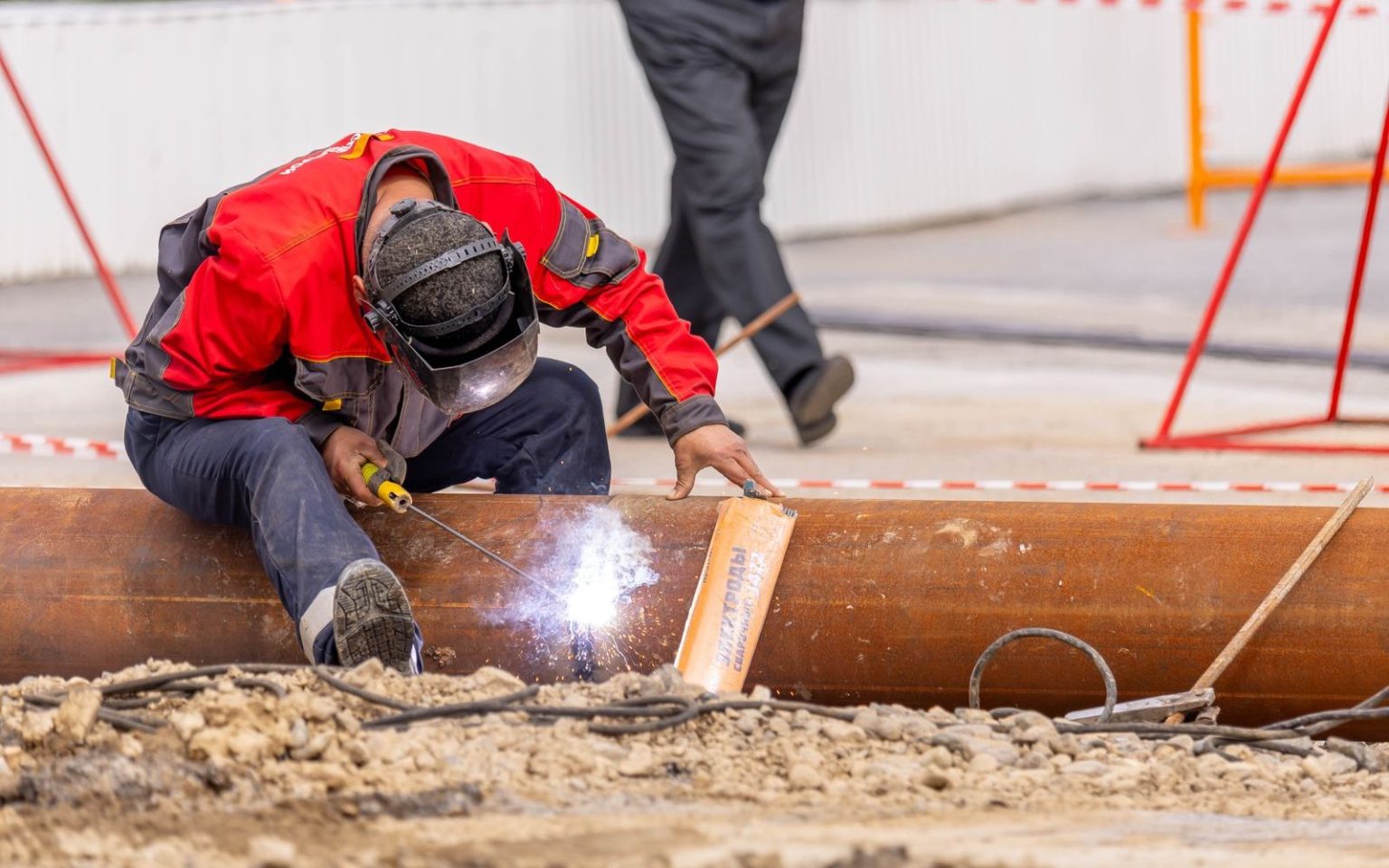
Galvanized steel can be welded in New Orleans, but the zinc coating has to be removed from the weld area first and restored afterward. Zinc vaporizes well below the temperature at which steel melts, so welding through it causes porous welds and releases zinc oxide fume. Industry practice is to grind the coating back at least one to four inches from either side of the weld, ventilate the work, and repair the coating once the weld cools.
Galvanized steel shows up everywhere along the Gulf Coast, because a zinc coating is the most common defense against a humid, salt-carrying climate. That same coating is what makes welding it a different job from welding bare steel.
The difference is not difficulty so much as sequence. At Big Easy Mobile Welders, we work on galvanized railings, gates, frames, and structural members across New Orleans, and every one of those jobs runs coating off, weld, coating back on.
Skipping either end of that sequence is what turns a sound repair into the next rust problem. Contact us today to have galvanized work assessed before anyone puts an arc to it.
What Is Galvanized Steel and Why Does It Behave Differently Under an Arc?
Galvanizing bonds a zinc layer to steel so the zinc corrodes instead of the steel underneath. On the Gulf Coast that trade is worth making, because bare steel in this air does not last.
The coating is metallurgically different from the steel it protects, and that difference is the whole issue. Zinc turns to vapor at a temperature well below the point where steel melts, so an arc that is doing its job on the steel is boiling the coating off around it.
That vapor has to go somewhere. Some of it escapes into the air, and some of it gets trapped in the molten weld pool, which is where the quality problems start.
What Happens to the Zinc Coating When You Weld It?
Three things happen at once when an arc meets a galvanized surface, and each one has to be managed separately. Understanding them is what separates a durable weld from a cosmetic one.
Vaporization at the Weld Zone

The zinc nearest the arc turns to vapor almost immediately. Coating farther out melts and runs, which is why the affected area is always wider than the weld bead itself.
That spread matters for planning. The coating loss extends past the joint, so the restoration step has to cover more area than people expect.
The steel underneath is unaffected by this. It is only the protective layer that is lost, which is exactly why it can be put back.
Porosity and Weld Quality
Zinc vapor trapped in the molten pool leaves gas pockets as the weld solidifies. Those pockets are porosity, and the American Galvanizers Association warns that zinc left in the weld can weaken it to the point of failure.
A porous weld looks acceptable and performs poorly. It is weaker than a sound weld and gives moisture a path straight into the joint, which on the Gulf Coast is the beginning of the next repair.
This is the practical argument for removing the coating first. Welding through zinc is possible, but it produces a weld that has to be judged on a curve.
Zinc Oxide Fume and Ventilation
The vapor that escapes the pool oxidizes into zinc oxide fume. Federal workplace safety rules name zinc-coated metals specifically, requiring indoor work on them to be done under local exhaust ventilation, and the American Galvanizers Association calls for welding galvanized steel in well-ventilated locations.
The controls are ventilation and coating removal, in that order of reliability. Removing the coating from the weld area reduces how much fume is generated in the first place.
This is a crew responsibility rather than a property owner's. Asking whoever welds your galvanized steel how they plan to ventilate the work is a fair question.
How Should the Zinc Coating Be Removed Before Welding?
Preparation is the step that decides whether the weld is sound. It is also the step most often skipped on a rushed job.
The sequence is straightforward:
- Identify the joint and the affected area: the prep zone is wider than the weld itself
- Remove the coating from the weld area: at least one to four inches from either side of the weld
- Clean both faces: the coating comes off both sides of the workpiece, not just the visible one
- Check the surface: bright steel in the weld area means the prep is done
- Plan the restoration before you start: the repair material should be on site, not ordered afterward
The American Welding Society standard for welding zinc-coated steel calls for welds to be made on steel free of zinc, and grinding back the coating is the preferred and most common way to get there. Burning the coating away and pushing molten zinc clear are recognized alternatives, though both leave more residue.
Our metal fabrication work treats coating removal as part of the weld prep rather than an optional extra, because the alternative is a joint that fails from the inside.
How Is the Galvanized Coating Restored After the Weld?
A weld on galvanized steel leaves a stripe of bare metal exactly where the assembly is now weakest. ASTM A780 sets out three repairs, and restoring the coating is what makes this one last.
Zinc-Rich Paint

Zinc-rich paint is the most practical field repair. It goes on with a brush or a spray can, needs no specialized equipment, and can be applied on site once the weld has cooled and the area is cleaned.
Surface preparation drives the result. The area has to be clean, dry, and free of weld spatter and slag before the coating goes on.
It carries lower cathodic protection than the other two methods, but for most railings, gates, and fence work it is the practical answer. Being field-repairable matters on an installed assembly.
Zinc Spray Metallizing
Metallizing sprays molten zinc onto the prepared surface, producing a coating closer in character to the original galvanizing. Under ASTM A780 it is restored at least as thick as the original coating and gives excellent cathodic protection.
The trade-off is equipment. This is a specified process rather than something reached for on a routine visit.
That thickness requirement is why it gets specified on structural members and assemblies facing constant salt exposure, where matching the original coating matters more than convenience.
Zinc-Based Solder and Paste
Zinc-based repair sticks and pastes are applied to a heated surface, where they flow and bond to the steel. They suit small areas and precise touch-ups.
They are the least practical of the three for large or awkward areas. Heating the surface uniformly on an installed assembly is not always possible.
Where they work well is a short weld on a member that can take controlled heat, giving a dense repair on a small footprint.
Choosing by Exposure
Exposure decides the method more than convenience does. A gate in a sheltered courtyard and a structural member near open water are different problems.
Anything within reach of salt spray, standing water, or constant wetting calls for the heavier repair. Anything interior or sheltered can take the simpler one.
Our pipe welding service follows the same logic on coated pipe, where the joint sits in whatever environment the run passes through.
Where New Orleans Property Owners Should Start
Start with the coating question rather than the weld. Ask whether the coating is being removed before welding and how it will be restored afterward, because those two answers predict how long the repair lasts.
At Big Easy Mobile Welders, we scope galvanized work with the removal and the restoration built into the job from the start. Call us today to have galvanized steel on your property looked at before the corrosion spreads.
Frequently Asked Questions
Can you weld galvanized steel?
Yes, galvanized steel is welded routinely, but the zinc coating has to be handled rather than ignored. Published industry practice is to remove the coating from the weld area first, weld on clean steel, ventilate the work, and restore the coating afterward. Welding straight through the zinc produces porous, unreliable welds.
Why do you have to remove the coating before welding?
Zinc vaporizes well below the temperature at which steel melts, so the coating boils off at the arc. That vapor gets trapped in the molten weld pool and leaves gas pockets as it solidifies, which is porosity. Removing the coating first gives a sound weld and generates less fume.
How much of the coating should be removed?
Published industry practice calls for the coating to be removed at least one to four inches from either side of the intended weld zone, and on both faces of the workpiece rather than just the visible side. The weld is then made on clean, bright steel with no zinc in the weld area.
What does zinc fume do?
Welding zinc-coated steel releases zinc oxide fume, which published occupational safety guidance treats as a recognized welding exposure to be controlled. Guidance calls for well-ventilated work areas or local exhaust ventilation at the source. Any specific health question belongs with a medical professional rather than a welding contractor.
What ventilation is needed for welding galvanized steel?
Published safety guidance calls for the work to be performed in a well-ventilated area, or with local exhaust ventilation positioned close to the weld so fume is captured at the source rather than allowed to rise past the welder. Enclosed and confined spaces call for additional controls.
How do you repair galvanizing after welding?
ASTM A780 recognizes three repairs: zinc-rich paint, zinc spray metallizing, and zinc-based solder. The standard does not rank one as best, because each performs differently on corrosion resistance, appearance, and abrasion resistance. Paint is the most practical on installed assemblies, metallizing is restored to the original coating thickness, and solder suits small touch-ups.
Why do galvanized welds come out porous?
Porosity on galvanized work comes from zinc vapor trapped in the weld pool. The zinc boils off faster than the pool solidifies, and the gas that cannot escape leaves voids behind. Removing the coating from the weld area beforehand is the standard way to prevent it.
Can you leave the galvanizing on and weld anyway?
Leaving the galvanizing on is physically possible, but it is not the recommended practice. The weld is likely to be porous, the fume load is higher, and the joint has a moisture path into it. On the Gulf Coast that combination shortens the life of the repair considerably.