Yes, aluminum can be welded in New Orleans, and many broken aluminum parts can be repaired on site. TWI's aluminum guide, first published in 1996 and since updated, says most common wrought grades can be welded with TIG or MIG. High-strength alloys and most of the 2xxx series are prone to cracking and are not recommended. Whether a repair holds depends on the alloy, how clean the metal is, its thickness, and the load it carries.
Last Updated: November 5, 2026
Table of Contents
A cracked aluminum gate, trailer rail or dock bracket raises one quick question. Can it be welded back together, or does it have to go?
At Big Easy Mobile Welders, we take on mild steel, stainless and aluminum welding on site around New Orleans. Aluminum repairs fall under our on-site mobile welding service, so the part rarely has to travel.
This page covers the factors behind a lasting aluminum weld, and which repairs are worth it. It also explains how an on-site aluminum repair works from the first photo to the final check.
Can Aluminum Be Welded in New Orleans, LA?
Aluminum welds well in New Orleans when the alloy suits it, and many broken parts can be repaired where they stand. TWI's Job Knowledge guide on aluminum alloys, first published in 1996 and updated since, puts it plainly. The metal "can be readily welded providing appropriate precautions are taken."
Those precautions separate a lasting repair from a weld that cracks. The same guidance names low weight, good corrosion resistance and weldability as the reasons aluminum is used. That mix is why it shows up on boat trailers, docks, gates and railings.
Aluminum is a family of alloys, and each one behaves differently under heat. If you are still choosing a metal for a new project, our guide to aluminum vs. steel welding covers that choice.
What Decides Whether an Aluminum Part Can Be Welded in New Orleans?
Four things decide whether an aluminum part in New Orleans can be welded and still do its job. They are the alloy series, the strength the part needs near the weld, how clean the metal is, and its thickness and fit.
The Alloy Series
Aluminum alloys are grouped into numbered series by their main alloying element. TWI notes that most wrought grades in the 1xxx, 3xxx, 5xxx and 6xxx series can be fusion welded with TIG, MIG and oxyfuel. Castings follow their own rules, covered in our guide to cast aluminum welding.
TWI singles out the 5xxx series for excellent weldability. Its filler table lists 5083 for ships, rail wagons and bridges, and 6061 for structural parts and pipes.
At the high-strength end, TWI warns that 7010, 7050 and most 2xxx alloys are prone to cracking. It does not recommend them for fusion welding. Our guide to metals you should not weld covers those alloys in more detail.
Strength Near the Weld
Welding heat changes the metal beside the joint, in an area called the heat-affected zone. TWI explains that non-heat-treatable alloys in the 1xxx, 3xxx and 5xxx series may soften there as they lose their work hardening.
Heat-treatable alloys in the 2xxx, 6xxx and 7xxx series lose strength in that zone too. Fusion welding redistributes the hardening elements there, which locally reduces strength.
Filler choice adds one more trade-off. TWI notes that crack-resistant filler can leave weld metal weaker than the parent metal. That matters most on a part that carries weight, so the load is part of every repair decision.
Surface Contamination
Aluminum is unforgiving about dirt, oil and moisture. TWI calls it one of the metals most susceptible to porosity, which means small gas pockets trapped inside the weld.
The main cause is hydrogen absorbed by the weld pool. TWI names the usual sources as oil and other hydrocarbons, moisture on the metal and filler, and water vapor in the shielding gas.
That matters in a humid city like ours. A trailer rail coated in road grime or a dock bracket wet with spray needs thorough cleaning first. TWI recommends rigorous cleaning of both the metal surface and the filler wire.
Thickness and Fit
Aluminum moves a lot as it heats and cools. TWI notes it expands about twice as much as steel and shrinks about 5% more as the weld solidifies.
That movement builds stress across the joint. TWI lists the wrong filler and parent metal pairing, poor weld geometry, and a tightly restrained joint as the main causes of solidification cracks.
TWI adds that the weld bead must be thick enough to withstand those contraction stresses. Good edge preparation and an accurate fit lower the restraint on the joint. Our guide on stopping welds from cracking explains why fit-up matters for any metal.
When Is an Aluminum Repair Worth Welding in New Orleans?
An aluminum repair in New Orleans is worth welding when the alloy welds well, the break is clean, and enough sound metal remains. It is often a poor bet when the part is a high-strength alloy, thin from corrosion, or broken in a spot that takes heavy load.
Common candidates are aluminum gates, boat trailer frames and dock framing. Our gate welding service handles custom gates and repairs in aluminum or steel, and trailer repair is also on-site work. Marine-grade aluminum in the 5000 and 6000 series is common in dock framing, as our guide to marine and dockside welding explains.
When a part cannot be welded safely, a new one is often the better fix. Our metal fabrication service builds finished parts by cutting, shaping and assembling metal for homes and businesses from Metairie to Slidell and Mandeville.
How Does On-Site Aluminum Welding Work in New Orleans?
On-site aluminum welding in New Orleans runs from identifying the metal, through cleaning the joint and shielding the arc, to a check of the weld. Compared with thin mild steel, aluminum may need another process, extra filler and a longer job.
Identifying the Metal
Each metal takes its own machine settings and filler wire, so we pin down the metal before heading out. A stamped alloy number, original paperwork or the manufacturer's details can settle it.
Photos help as well. A clear shot of the break, the whole part and any markings tells us a lot about the repair.
You can send those details through our contact page when you describe the job. An alloy that cannot be confirmed calls for caution, since some high-strength grades are prone to cracking.
Cleaning the Joint
Cleaning comes before any arc on aluminum. TWI recommends degreasing first, then mechanical cleaning such as stainless steel wire brushing, scraping or filing.
The order matters. Oil and grease come off first, and only then does the brush touch the metal.
Old paint, sealant and corrosion around the break come off as well. This step can take longer than the weld, and it is the main defense against porosity.
Shielding the Arc Outdoors
TIG and MIG welding use a shielding gas that protects the molten pool from the air. TWI advises that the arc be protected from drafts so air does not get pulled into the weld.
That is a practical concern along a fence, at a boat launch or in an open lot. Wind screens and careful positioning keep the gas shield where it belongs.
Power is rarely the problem. Many mobile welding setups run on an engine-driven unit that generates its own electricity. That makes a dock or driveway without a nearby outlet workable.
Checking the Finished Joint
TWI notes that aluminum's high heat conductivity and fast-freezing weld pool make it prone to profile defects. These include lack of fusion, lack of penetration and undercut along the edge of the bead.
That is why the finished weld gets a close look before the job is called done. A smooth, even bead that blends into both sides of the joint is a good sign.
The repair is finished on site, wherever the part sits, and our welder then walks you through the completed weld.
Where to Start With a Broken Aluminum Part
Many aluminum parts can be welded, but the alloy, cleanliness, thickness and load decide whether a repair on a gate, trailer or dock will last. A close look at the part before anyone strikes an arc shows whether to weld it or replace it.
At Big Easy Mobile Welders, we confirm the metal before we arrive, and every on-site visit includes an estimate at no cost. Call (504) 370-2757 to get a free estimate on your cracked aluminum gate, trailer or fixture.
Frequently Asked Questions
Can you weld aluminum to aluminum?
Yes. Aluminum is welded to aluminum all the time, using TIG or MIG with a filler suited to the alloy. TWI notes that 6xxx alloys are often welded with a 4xxx filler, while high-magnesium alloys such as 5083 should not use it.
Matching the filler to the parts is what keeps the joint sound.
Is welding aluminum hard?
Welding aluminum takes more care than welding mild steel. It conducts heat very fast, its weld pool freezes quickly, and it picks up porosity from oil or moisture. Heat-treatable alloys also lose some strength in the heat-affected zone next to the weld.
Careful cleaning, the right filler and steady heat control make the difference.
Can you MIG weld aluminum?
Yes, TWI lists MIG among the processes that can fusion weld most common wrought aluminum grades. On aluminum it needs a spool gun or push-pull feeder for the soft wire. Like every aluminum process, it needs clean metal, the right filler and a gas shield kept out of the wind.
The alloy limits that apply to TIG apply to MIG too.
Can you TIG weld aluminum?
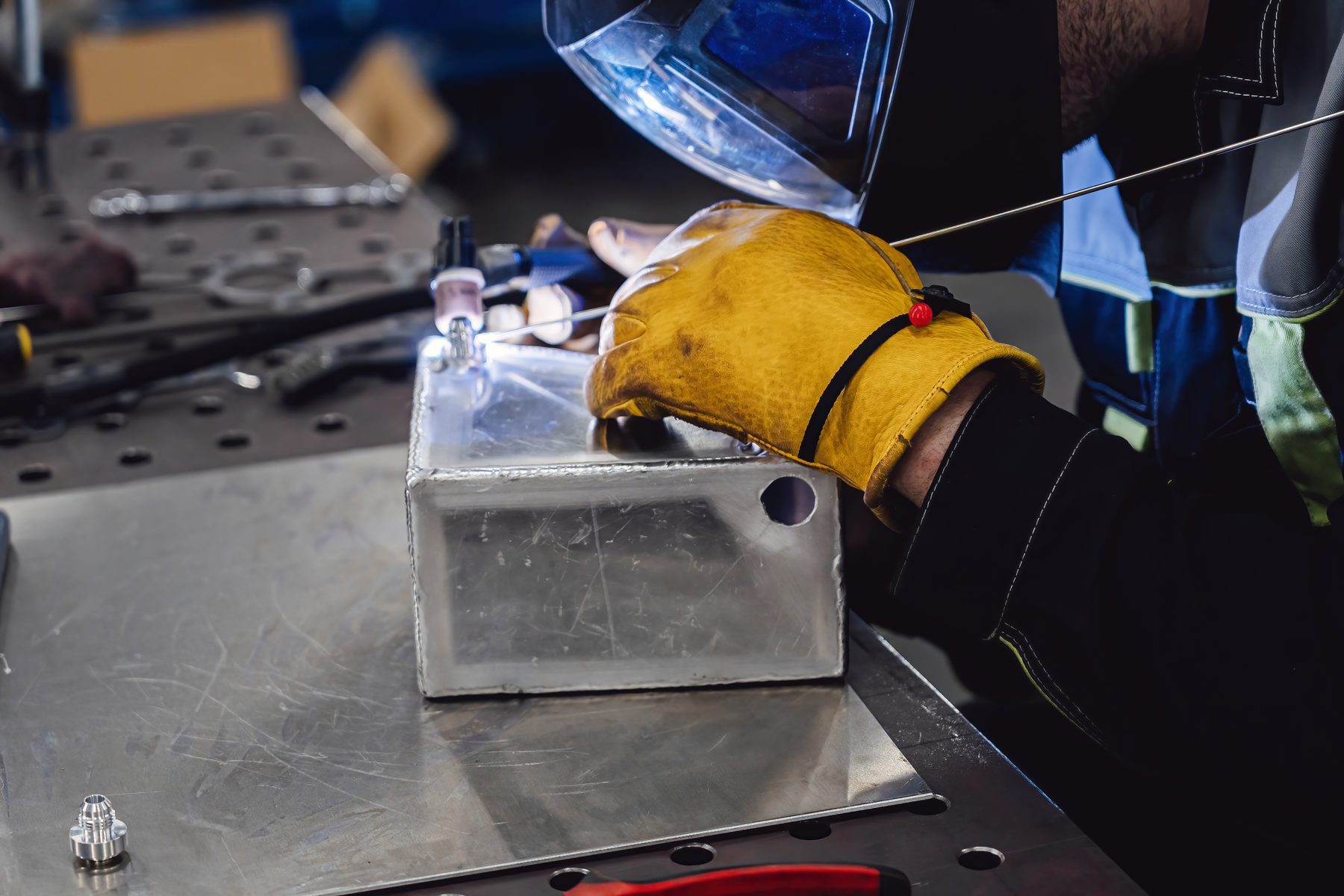
Yes, TIG is one of the main processes TWI lists for welding wrought aluminum alloys, along with MIG. TIG gives fine control on thin material where a neat finish matters. The same alloy limits apply, so high-strength alloys such as 7050 and most 2xxx grades are still poor candidates.
What do you need to weld aluminum?
A sound aluminum weld starts with a confirmed alloy and a clean, dry joint at the repair. It also needs a filler suited to the alloy and a gas-shielded process such as TIG or MIG, with the arc protected from drafts.
A structural or load-bearing part calls for an experienced welder who can judge the repair.